

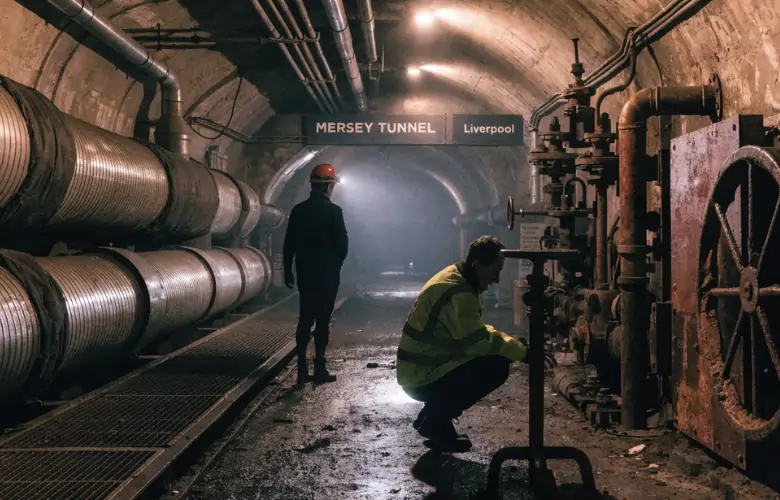
Mersey Tunnel is considered one of the most significant sites of transportation in the UK. This underground tunnel connects Liverpool with the Wirral Peninsula by passing under the Mersey River. The construction of the tunnel took place in the 20th century and revolutionized transportation and trade in northwest England. The engineering marvel attracts visitors from all over the world who are interested in visiting the site for its importance and engineering design. At present, the tunnel plays a key role in the day-to-day transportation needs of the citizens as well as in the city’s past history of industry and economic development.
The Early History of the Underground Crossing
Before the tunnel system existed, crossing the River Mersey was much slower and more difficult than it is today. Ferry services were the main method of transportation between Liverpool and the Wirral Peninsula, but increasing populations and rising commercial activity created serious transport problems. Long waiting times and unpredictable weather conditions often made ferry travel inconvenient for daily commuters and businesses.
During the late nineteenth century, engineers and local authorities began discussing the idea of constructing a permanent underground connection beneath the river. At that time, underwater tunnel construction was considered an extremely difficult engineering challenge because modern construction technology was still developing. Despite these difficulties, public support for a faster and more reliable crossing continued growing throughout the region.
Main Reasons for Building the Tunnel
- Growing trade and business activity
- Increasing population across Merseyside
- Demand for faster transportation routes
Construction and Engineering Achievements
The construction of the Queensway Tunnel officially began during the 1920s and required years of detailed planning and excavation work. Thousands of workers participated in the project while operating deep beneath the River Mersey under extremely challenging conditions. Engineers faced several major obstacles including water pressure, unstable ground, and underground ventilation problems during construction.
Advanced systems were designed to maintain safe air quality and remove vehicle fumes from inside the tunnel. Structural reinforcement and drainage technology were also carefully developed to ensure long-term safety and stability beneath the riverbed. These engineering innovations helped make the project one of the most impressive infrastructure developments of its time.
When the tunnel officially opened in 1934, it became one of the longest underwater road tunnels in the world. The successful completion of the project represented a major achievement for British engineering and transformed transportation throughout the Liverpool region.
Architectural Design and Historic Importance
The Queensway Tunnel is admired not only for its engineering success but also for its impressive architectural design. The entrances and ventilation towers feature distinctive art deco styling that reflects popular design trends from the early twentieth century. These structures quickly became recognizable landmarks within Liverpool because of their unique appearance and historical importance.
Many visitors are surprised by the decorative details associated with the tunnel entrances because transport infrastructure is usually designed mainly for practicality. The ventilation towers, in particular, remain among the most recognizable structures connected to Liverpool’s industrial heritage. Their design reflects the ambition and confidence of the era in which the tunnel was built.
Over the years, the underground crossing has appeared in films, documentaries, and television productions connected to Liverpool’s industrial and cultural history. Today, the historic towers and entrance buildings remain valuable parts of the city’s architectural identity.
Expansion Through the Kingsway Tunnel
As traffic demand increased during the twentieth century, authorities realized that a second underground crossing was necessary to reduce congestion and improve transport efficiency. This led to the construction of the Kingsway Tunnel, which officially opened in 1971. The second crossing provided improved transportation links between Liverpool and Wallasey while supporting regional growth.
Unlike the older Queensway Tunnel, the newer route included wider lanes, updated safety systems, and more advanced engineering methods. These improvements allowed the newer crossing to handle larger traffic volumes more effectively and improve travel conditions for motorists.
Important Features of the Kingsway Tunnel
- Wider driving lanes
- Modern traffic systems
- Improved ventilation technology
The addition of the Kingsway Tunnel strengthened transportation infrastructure throughout Merseyside and reduced pressure on existing routes. Today, both tunnels continue playing an essential role in supporting daily travel across the River Mersey.
Transportation and Economic Benefits
The tunnel network remains one of the most important parts of transportation throughout Liverpool and surrounding areas. Thousands of commuters rely on the underground crossings every day because they significantly reduce travel times between Liverpool and the Wirral Peninsula. Businesses also depend on reliable road connections to transport employees, goods, and services efficiently across the region.
During football matches, concerts, festivals, and other large public events, the tunnels become especially important for traffic management. Without these underground routes, alternative roads would experience severe congestion and longer travel delays throughout the area.
The mersey tunnel therefore continues supporting daily life and regional connectivity throughout Merseyside. Its role within the local transportation system remains highly valuable for residents, businesses, and visitors alike.
Tourism and Visitor Experience
Tourism throughout Liverpool has benefited greatly from improved transportation across the River Mersey. Visitors traveling by car can easily access waterfront attractions, museums, shopping districts, football stadiums, and cultural landmarks throughout the region. Many travelers are fascinated by the history and engineering behind the underground crossings because they represent an important part of Britain’s industrial development.
The tunnels are frequently mentioned in local travel guides and city tours connected to Liverpool’s heritage. Visitors interested in architecture also appreciate the art deco design of the entrance buildings and ventilation towers. The underground routes therefore contribute not only to travel convenience but also to the overall tourism experience within the city.
Popular Reasons Tourists Visit the Area
- Historic Liverpool waterfront
- Famous football stadiums
- Industrial and engineering heritage
Even today, the tunnel system continues attracting historians, engineers, photographers, and travelers from around the world. Its historical and cultural significance remains highly respected throughout the United Kingdom.
Future Developments and Modern Upgrades
Modern safety technology plays a major role in maintaining efficient operations throughout the tunnel network. Surveillance cameras monitor traffic movement continuously while emergency communication systems allow drivers to contact tunnel staff if assistance is required. Ventilation systems maintain safe air quality levels, and upgraded lighting improves visibility for motorists traveling underground.
Authorities continue investing in modernization programs to improve efficiency, environmental sustainability, and traffic management throughout the region. Modern monitoring systems and digital technologies are expected to play a larger role in future operations. Infrastructure investment will also help preserve the tunnels while adapting them to future transportation demands.
As Liverpool continues growing economically and culturally, the underground crossing system will remain an essential transportation link connecting communities across the River Mersey for many decades to come.
(FAQs)
1. What is the Mersey Tunnel used for?
The Mersey Tunnel is used for road transport under the River Mersey, connecting Liverpool with the Wirral Peninsula. It supports daily commuting, business travel, and tourism. Thousands of vehicles pass through it every day, making it a vital transport route in northwest England.
2. How many tunnels are there under the River Mersey?
There are two main tunnels: the Queensway Tunnel and the Kingsway Tunnel. Both are designed to handle heavy traffic and provide fast access between Liverpool and surrounding areas. Together, they form an essential part of the region’s road network.
3. When was the tunnel system built?
The Queensway Tunnel opened in 1934 after years of construction work, while the Kingsway Tunnel was later opened in 1971. Both projects were developed to improve transport efficiency and reduce congestion across the River Mersey.
4. Is there a toll for using the tunnels?
Yes, drivers must pay a toll to use the tunnel system. The charges help maintain safety systems, ventilation, lighting, and overall tunnel operations. Payment methods are designed to be simple and quick for users.
5. Why is this tunnel system important?
It is important because it provides a fast, reliable connection between Liverpool and the Wirral Peninsula. It reduces travel time, supports local businesses, and helps manage traffic flow across the region.
Conclusion
The mersey tunnel is one of the greatest engineering feats in the United Kingdom, serving the people in crossing over the River Mersey for many years now. It has been significant in enhancing transport, boosting the economy of the businesses involved, and connecting Liverpool to the Wirral Peninsula. Over time, it has continued serving millions of motorists annually through its reliable operations. Apart from the significance in the movement of people and vehicles, the tunnel has historical importance because of its connection to the city of Liverpool and engineering feat.